Wondering what makes a Ladue home feel unmistakably luxurious the moment you pull up? In this market, luxury is not just about square footage or a high-end finish list. It is about how the home sits on the lot, the materials you see, and the architectural details that make the property feel lasting and intentional. If you are buying, selling, or simply studying the Ladue market, understanding these details can help you see value more clearly. Let’s dive in.
Why Ladue luxury feels distinct
Ladue’s architectural character did not happen by accident. The city established an Architectural Board soon after incorporating in 1936, and its current guidelines still emphasize compatibility of design, quality materials, craftsmanship, and neighborhood context.
That matters because in Ladue, the home itself is only part of the story. The overall look also comes from generous setbacks, mature trees, and lower-density zoning that allows many homes to sit well back from the street. In some areas, homes are reached by private lanes, which adds to the estate-like feel.
The city’s zoning districts reinforce that spacious character. District A includes 3-acre lots, District B includes 1.8-acre lots with 50-foot setbacks, District C includes 30,000-square-foot lots, and Districts D, E, and E1 include lots from 10,000 to 15,000 square feet.
The first luxury detail is placement
Before you notice a dormer, chimney, or portico, you usually notice how the house meets the land. In Ladue, many luxury homes feel impressive because they have room to breathe.
A long approach, a broad front lawn, and a mature canopy often shape the first impression. Even when homes vary in style, that estate-scale placement creates a sense of privacy and permanence.
For buyers, this can help explain why two homes with similar size may feel very different in person. For sellers, it is a reminder that curb appeal in Ladue includes the full setting, not just the front elevation.
Tudor details with old-world character
Tudor Revival and Neo-Tudor homes are part of Ladue’s visual language, especially among early 20th-century homes. St. Louis preservation sources describe Tudor Revival houses as brick homes with prominent front gables, dormers, casement windows, and decorative half-timbering with stucco infill.
These homes often feel picturesque without looking overly formal. The massing may be slightly asymmetrical, and the rooflines, chimneys, and gables do much of the visual work.
When you tour a Tudor-style luxury home in Ladue, details that often stand out include:
- Steep front-facing gables
- Brick exteriors with stone accents
- Decorative half-timbering
- Tall or prominent chimneys
- Casement windows
- Dormers that break up the roofline
What makes these homes feel luxurious is not just the style itself. It is the craftsmanship and material depth that give the exterior a durable, established look.
Colonial and Georgian details with formal balance
If Tudor homes feel romantic and storybook-like, Colonial Revival and Georgian homes usually feel more formal and symmetrical. Preservation sources define Colonial Revival houses by classical proportions, symmetry, hipped roofs, columns or pilasters, and features such as fanlights or Palladian windows.
Georgian design often pushes that formality further. You will often see a rectangular plan, balanced window placement, and a strong central entry or portico.
In Ladue, these details translate especially well on larger lots. The broad front approach, centered doorway, and balanced façade can create a stately look without feeling flashy.
Key details to watch for include:
- Symmetrical window layout
- Central front entries
- Porticos supported by columns
- Pilasters framing the entrance
- Fanlights above entry doors
- Palladian windows
- Hipped roofs and formal proportions
For sellers, these are often the details that photograph beautifully and support a polished first impression. For buyers, they can signal a home with strong architectural bones that may adapt well to later interior updates.
French and English-inspired estate details
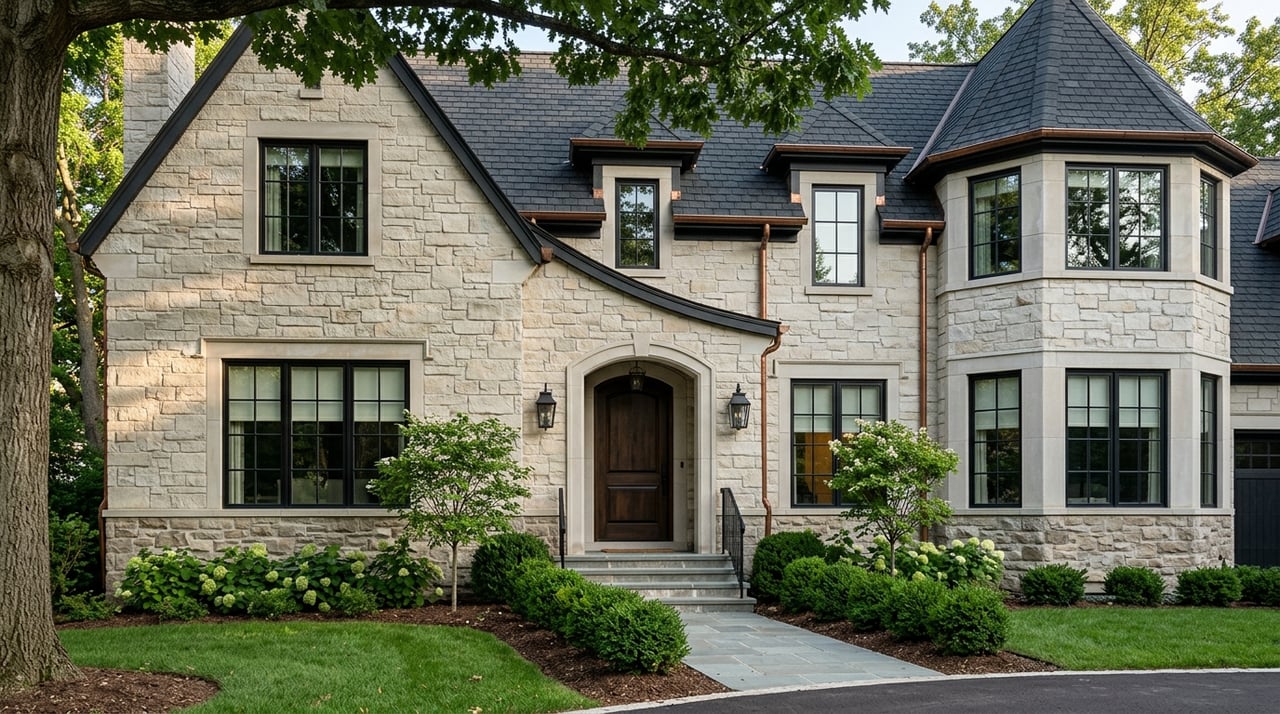
Some of Ladue’s most memorable homes draw from French-inspired, Chateauesque, or English-country design traditions. St. Louis preservation sources describe Chateauesque architecture as French Renaissance-derived, with steeply pitched roofs, ornate dormers and chimneys, projecting bays, and occasional turrets.
In practice, many Ladue estate homes use this broader European vocabulary in a restrained way. The result often feels gracious rather than overly ornate.
These homes may feature:
- Strong, steep rooflines
- Decorative dormers
- Stone or brick walls with limestone trim
- Projecting bays
- Tall chimneys
- Turret-like elements in some designs
- Long driveways and formal approaches
This style family often works especially well in Ladue because the larger parcels support a more layered arrival experience. The house, driveway, landscaping, and outdoor living spaces all contribute to the final impression.
Modern homes that still fit Ladue
Ladue is not limited to traditional architecture. The city’s design guidance also leaves room for contemporary homes when they are carefully scaled and responsive to the lot and surrounding context.
That is an important point for today’s buyers and sellers. A modern Ladue home does not need to imitate a 1920s estate to feel appropriate.
Instead, luxury often shows up through clean massing, strong indoor-outdoor connection, and thoughtful placement around mature trees or natural site features. Local examples have included multi-level contemporary homes built around existing trees and newer custom homes that preserve much of their original design character during updates.
Common modern luxury details may include:
- Cleaner roof and wall lines
- Broad expanses of glass
- Strong connection to terraces and outdoor spaces
- Simplified detailing with high-quality materials
- Massing that respects the parcel and surrounding homes
In other words, Ladue can support a modern look, but the home still needs to feel intentional, well-made, and grounded in its setting.
Materials that signal lasting quality
One of the clearest ways Ladue defines luxury is through materials. The city’s Architectural Review Board guidelines call for materials and textures that are compatible with neighboring buildings.
Accepted exterior materials include masonry such as brick and stone, stucco or EIFS, and wood or engineered-wood siding. Vinyl siding is not acceptable.
That single standard says a lot about the Ladue market. Homes here tend to favor durable, substantial materials that support a tailored appearance over quick trend-driven choices.
Roofing matters too. The city notes that roofs should match the architecture and may include natural slate, tile, wood shakes, and certain metals. For flat roofs, the expectation is typically a finished parapet or fascia.
For buyers, these details can help explain both visual appeal and maintenance expectations. For sellers, material quality can be an important part of how your home is positioned in the luxury market.
Windows, shutters, and trim matter more than you think
In high-end architecture, small details often shape the overall impression. Ladue’s design guidance specifically notes that windows should be appropriate to the style of the house and carry consistent detailing across elevations.
That consistency is a major reason many Ladue homes feel composed and custom. The windows do not look like an afterthought.
Shutters are another good example. The city’s guidelines note that shutters should appear operable and be sized proportionally to the sash.
That may sound minor, but it reflects a bigger principle. In Ladue, luxury tends to come from details that feel authentic to the architecture.
Outdoor structures complete the picture
Luxury in Ladue often extends beyond the main house. Accessory structures and outdoor living spaces are part of the property’s architectural vocabulary.
Depending on the lot and home style, you may see features such as:
- Screened porches
- Open galleries
- Terraces
- Pool houses
- Carriage-house-style garages
These features do more than add function. They help connect the home to the landscape and support the estate feel that defines many Ladue properties.
What buyers and sellers should notice
If you are buying in Ladue, it helps to look beyond finishes and focus on architectural integrity. Ask yourself how the home sits on the lot, whether the materials feel substantial, and whether the details match the style of the house.
If you are selling, these same features can shape how your home is presented and priced. Strong photography, clear positioning, and attention to the property’s architectural story can make a real difference, especially in a market where nuance matters.
Ladue luxury is rarely about one flashy feature. More often, it is the combination of placement, proportion, material quality, and context that creates long-term appeal.
When you understand those signals, you can evaluate homes more confidently and market them more effectively. If you are preparing to buy or sell in Ladue, Jason D Cooper can help you navigate the details that matter most.
FAQs
What architectural styles are most common in Ladue luxury homes?
- Ladue luxury homes often include Tudor Revival, Neo-Tudor, Colonial Revival, Georgian, French-inspired, English-country, and carefully scaled modern or contemporary designs.
What exterior materials define Ladue luxury homes?
- Ladue’s design guidance emphasizes quality materials such as brick, stone, stucco or EIFS, and wood or engineered-wood siding, while vinyl siding is not acceptable.
Why do Ladue homes often feel more private?
- Many Ladue properties feel private because of lower-density zoning, generous setbacks, mature landscaping, and in some areas private lanes that place homes farther from the street.
What details make a Tudor-style Ladue home stand out?
- Common Tudor details include front gables, dormers, casement windows, decorative half-timbering, brick walls, and prominent chimneys.
What defines a Georgian or Colonial-style Ladue home?
- These homes are often defined by symmetry, classical proportions, balanced windows, central entries, porticos, columns or pilasters, and features such as fanlights or Palladian windows.
Can modern architecture fit in Ladue?
- Yes. Modern homes can fit well in Ladue when they are carefully scaled, use quality materials, and respond thoughtfully to the lot, mature trees, and surrounding neighborhood context.