Trying to choose between Kirkwood and Webster Groves? You are not alone. Both offer character homes, lively local scenes, and quick access to the core of St. Louis, yet the day-to-day feel is different. In this guide, you will see how they compare on housing and price, main streets and local commerce, commute and transit, parks and recreation, and overall vibe so you can zero in on the right fit. Let’s dive in.
Kirkwood and Webster at a glance
Kirkwood snapshot
Kirkwood is an inner-ring suburb with roots as a planned railroad community from the 1850s. Its 2024 population estimate sits in the high 29,000s, according to U.S. Census QuickFacts. Life often centers on the historic 1893 train station and a compact, walkable downtown. The station remains an active Amtrak stop on the Missouri River Runner, as outlined by Great American Stations.
Kirkwood’s downtown is intentionally pedestrian-focused, guided by the Downtown Kirkwood Special Business District. The area hosts a long-running farmers’ market plus seasonal festivals and concerts. Citywide, Kirkwood lists more than 300 acres of parkland, with a large central park and multiple amenities detailed on the city’s Parks and Trails page.
Webster Groves snapshot
Webster Groves sits just west of the St. Louis city line with a population around 24,000 (2020 Census; 2024 estimate slightly lower) per U.S. Census QuickFacts. It is closely tied to Webster University and features several neighborhood business districts rather than a single central downtown. Old Orchard, Old Webster, and Crossroads each carry a small-town main-street feel.
Old Orchard’s gazebo node and walkable strip have been recognized by the American Planning Association’s Missouri Chapter as one of the state’s “Great Places,” highlighting its community design and programming, as noted by the Missouri Planning Association. Webster also runs an active parks system, with neighborhood greenspaces and greenways listed on the City of Webster Groves parks page.
Housing styles and price context
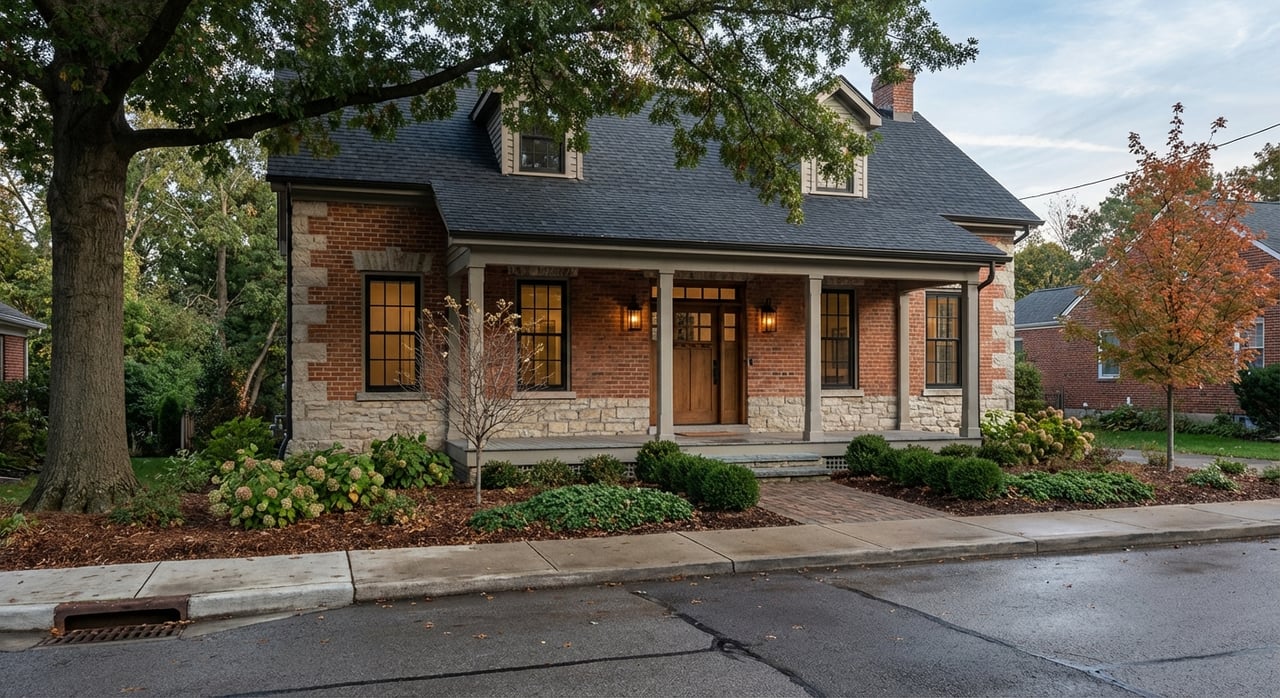
Both cities are classic inner-ring suburbs with strong early-20th-century architecture. You will see bungalows, Craftsman, Tudor and Colonial Revival homes, plus mid-century ranches and selective infill. Historic districts and long-established blocks shape the streetscape and lot patterns.
- Median sale price (Redfin, Jan 2026): Kirkwood about $550,000; Webster Groves about $455,000. City medians are time-sensitive snapshots and vary by neighborhood, size, lot, and level of updates. Verify current numbers on publication day and check recent comps when you target a specific area.
Kirkwood housing
Near downtown, you will find early-20th-century bungalows and Tudors on walkable blocks. Larger parcels appear in adjacent neighborhoods, with scattered infill and newer construction across the city. For move-up buyers, many properties land in the mid-$400s to $700s, with larger or extensively renovated homes above that depending on specifics.
What this feels like in practice: if you want to walk out for coffee, browse shops, and be near the historic train station, you will find options a few blocks off the core. If you want a bit more elbow room, look slightly farther out where lot sizes and house scale often increase.
Webster Groves housing
Webster offers a broad mix of period styles across tree-lined blocks. Several tightly gridded neighborhoods near Old Webster and Old Orchard have smaller lots and intimate streets. Farther from the commercial nodes, you will see quieter settings and some larger parcels.
Market-wise, inventory for move-up buyers commonly runs from the mid-$300s to $600s, with premium historic pockets trending higher. Central historic areas can price well above the city median. Match your budget to the house scale, renovation level, and proximity to the main-street districts you prefer.
Main streets and daily life
Downtown Kirkwood feel
Downtown Kirkwood is compact, lively, and easy to navigate on foot. The 16-block area blends boutiques, restaurants, civic spots, and the iconic train station, coordinated by the Downtown Kirkwood Special Business District. Regular events and the farmers’ market pull in visitors from across the region. If you want one concentrated hub where you can complete errands, meet friends, and attend a concert on a warm evening, this setup delivers.
Webster’s multiple nodes
Webster reads like several small main streets rather than one downtown. Old Orchard’s gazebo area brings neighborhood markets and arts programming, recognized by the Missouri Planning Association. Old Webster and Crossroads add more independent dining and retail. If you prefer smaller, slightly quieter strolls with options spread across a few districts, Webster’s format is a natural fit.
Commute and transit
Kirkwood options
Kirkwood’s rail DNA still matters. The historic station serves Amtrak’s Missouri River Runner, which is a unique amenity in the metro, per Great American Stations. Driving access is straightforward via I-44, I-270, and Lindbergh. Local bus routes offer connections to nearby MetroLink stations.
Webster Groves options
Webster is oriented to local access and regional driving, with bus connections and short hops to nearby MetroLink stations. If you rely on transit, review MetroBus routes that link to your workplace or to the Red and Blue MetroLink lines. Many residents still choose to drive, but transit is feasible depending on your route.
Commute tips
- Test your likely drive at peak hours in both directions. I-44, I-270, and Lindbergh behave differently by time of day and incident.
- If the Amtrak stop appeals to you for occasional trips, Kirkwood offers that convenience. If you prefer MetroLink access, weigh your proximity to stations from each city.
- U.S. Census QuickFacts report mean travel times to work for each municipality. Check the latest tables for a baseline comparison, starting with Kirkwood and Webster Groves.
Parks and recreation
Kirkwood highlights
Kirkwood lists 300-plus acres of parkland managed by an active parks and recreation department. The central Kirkwood Park features an aquatic center, ice rink, amphitheater, and athletic fields, with year-round programming across facilities. Explore amenities and locations on the city’s Parks and Trails page. Seasonal events like the Greentree Festival and summer concert series add to the community calendar.
Webster Groves highlights
Webster’s park system includes neighborhood staples like Larson Park, Lockwood Park, and Ivory Crockett Park, along with connections to the Deer Creek Greenway. Smaller greens and pavilions make it easy to find play spaces and host get-togethers. See the full list, maps, and reservation details on the City of Webster Groves parks page.
Which fits your lifestyle?
- Downtown experience: Choose Kirkwood if you want one concentrated, energetic downtown with frequent events. Choose Webster Groves if you like several smaller commercial streets dispersed across the city.
- Architectural character: Both cities feature strong early-20th-century homes, mid-century options, and selective infill. Walk a few blocks in each to compare street texture, setbacks, and lot sizes that match your preferences.
- Price positioning: As of Jan 2026, Redfin shows a higher citywide median in Kirkwood than in Webster Groves. Both cities contain more affordable pockets and higher-end enclaves, so focus on your target neighborhood and house type rather than just the city median.
- Commute preferences: If an Amtrak stop is a plus for occasional trips, Kirkwood has it. If you want multiple small neighborhood hubs with quick drives to nearby MetroLink stations, Webster Groves may align well.
- Parks and programs: Kirkwood’s large central park with ice and aquatics is a notable draw. Webster Groves offers a web of neighborhood parks and greenways for easy, local access.
Tour both in one weekend
- Saturday morning: Start in Downtown Kirkwood. Grab coffee, walk the core blocks, and time how long it takes to reach the train station. If the farmers’ market is open, take a lap and note the energy.
- Midday: Drive a few blocks out to sample different housing pockets. Compare street width, tree canopy, lot size, and on-street parking. Swing by Kirkwood Park to see the aquatic center and rink area.
- Sunday morning: Head to Webster’s Old Orchard for a stroll around the gazebo and shops. Then check Old Webster and Crossroads to experience the multi-node feel.
- Afternoon: Visit Larson Park or the Deer Creek Greenway segment to get a sense of local recreation. Test-drive your likely commute routes from both cities at peak times.
Ready to compare homes side by side?
If you are torn between these two classics, a guided tour that pairs neighborhoods, price points, and commute routes will clarify your decision quickly. I will help you stack up options apples-to-apples and time-block a search that respects your schedule. For tailored advice and a plan that fits your goals, connect with Jason D Cooper.
FAQs
How do home prices compare in 2026 between Kirkwood and Webster Groves?
- As of Jan 2026, Redfin reports a higher median sale price in Kirkwood (about $550,000) than in Webster Groves (about $455,000), but neighborhood and house specifics can swing pricing.
Is there a walkable downtown in Kirkwood or Webster Groves?
- Kirkwood offers one compact, lively downtown centered on the historic train station, while Webster Groves features multiple smaller main streets in Old Orchard, Old Webster, and Crossroads.
What transit options serve Kirkwood and Webster Groves?
- Kirkwood has an active Amtrak stop on the Missouri River Runner and local bus links, while Webster Groves is primarily served by MetroBus routes with short drives to nearby MetroLink stations.
What parks or family amenities stand out in each city?
- Kirkwood’s central park includes an aquatic center, ice rink, and amphitheater, while Webster Groves offers multiple neighborhood parks and greenway connections listed on the city’s parks page.
How should I plan a test commute from these suburbs?
- Drive likely routes at peak times from each city, compare I-44, I-270, and Lindbergh access, and review commute data in U.S. Census QuickFacts for a baseline before deciding.