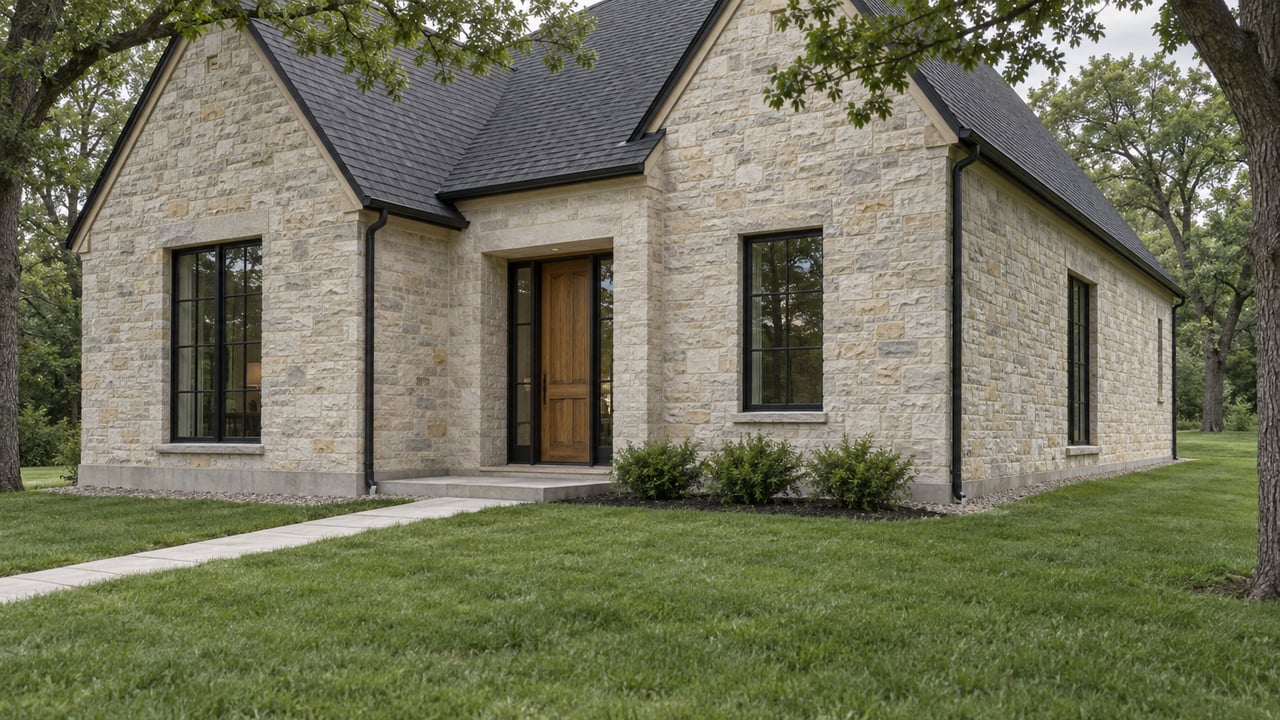
Two large-lot subdivisions broke ground in Wildwood within about a year of each other. Hills Hollow Estates went up on 31 acres at Pond Road and Route 100. The Reserve at St. Albans followed on 55 acres off St. Albans Road, west of Route 100. Both are marketed the same way real estate listings market every new subdivision in this part of St. Louis County: acreage, lot count, builder name, a rendering of the entrance sign. Neither listing sheet will tell you that the wastewater system serving your future home was the single most argued-over line item at Planning and Zoning.
That's the part a buyer touring new construction in Wildwood usually never sees. A three-acre lot with a builder's name attached looks like a straightforward purchase. Whether that lot flushes into a public sanitary line, a centralized treatment plant, or an individual septic system approved through a specific city waiver changes what you're actually buying, and it's not something the square footage tells you.
The Default Nobody Advertises
Wildwood's subdivision and development regulations set a default for large-lot, single-family subdivisions built in areas the city's public sanitary sewer doesn't reach: install a centralized package wastewater treatment plant. Individual septic isn't the baseline option. It's an exception a developer has to formally request, called a waiver, and argue for in front of the city's Planning and Zoning Commission.
That's exactly what happened at both Hills Hollow Estates and The Reserve at St. Albans. In each case, the developer submitted a petition asking the city to waive the packaged-treatment-plant requirement so the subdivision could use individual household systems instead. At The Reserve at St. Albans, the site sits in the city's Nonurban Residential zoning district, where the subdivision regulations apply this requirement directly. The Planning Department's first move on that project was actually a recommendation to deny the individual-system request, based on soil conditions on the tract.
Rural stretches of Wildwood have long relied on septic and well water rather than public utilities, and that hasn't changed. What has changed, at least in how it plays out project by project, is that getting there now runs through a documented city process with a paper trail, not a default assumption.
What Winning the Waiver Actually Costs
The Reserve at St. Albans didn't get its waiver on the first attempt. After the February denial recommendation, the developer requested more time, brought in a geologist report commissioned through the Missouri Department of Natural Resources, and returned to the commission with a revised proposal. Planning and Zoning ultimately gave initial approval for individual treatment systems on the condition that the developer provide a $5,000 deposit per home to the homeowners association, specifically earmarked for future septic system maintenance, with a central service provider contracted to inspect every system annually.
Hills Hollow Estates went through a parallel process for its eight lots. The Planning and Zoning Commission recommended approval of that subdivision's septic waiver with its own set of conditions: tertiary treatment standards, a $20,800 maintenance reserve, and a ten-year guarantee meant to lock in upkeep funding regardless of what happens to the HOA's other finances. The city also required the subdivision to reserve an easement or common area in case it ever needs to connect to a centralized plant in the future, and required plumbing in each home to be built ready for that connection.
None of that shows up in a standard listing description. A buyer comparing two "new construction, three-plus acre lot" homes has no way to tell, just from the marketing, whether one comes with a mandatory HOA-held maintenance fund and annual inspection contract and the other doesn't.
Why the City Keeps Tightening the Terms
The conditions attached to Hills Hollow Estates weren't written from scratch. City planning staff modeled them on an earlier waiver known as West Eden, specifically to close gaps that had shown up in older communal systems. During the Hills Hollow discussion, commissioners talked openly about that track record: Wildwood has communal wastewater plants at Homestead Estates and Three Sisters Farm that ran into trouble under homeowners association management, to the point that Missouri American Water or St. Louis County Water eventually took them over.
That history is the reason the waivers keep getting stricter. Each time a plant failed under an HOA that couldn't sustain it, the next waiver came back with more teeth: bigger reserves, longer guarantees, mandatory third-party inspection instead of self-monitoring. That means a waiver's vintage matters almost as much as its terms. A subdivision approved in 2025 or 2026 is very likely operating under tighter, more specific maintenance language than a subdivision approved a decade earlier under looser conditions, simply because the city learned from what happened in between.
Reading a Wildwood Subdivision Before You Write an Offer
Here's how four real wastewater arrangements in Wildwood compare, based on what's actually on record with the city:
| Subdivision | Wastewater Setup | Who Holds the Obligation | What's on Record |
|---|---|---|---|
| Homestead Estates / Three Sisters Farm | HOA-run communal treatment plant | Homeowners association | Some plants struggled under HOA management and were eventually taken over by Missouri American Water or St. Louis County Water |
| West Eden | Individual septic under waiver | HOA, terms later used as a model | Cited by planning staff as the template for stronger maintenance conditions |
| Hills Hollow Estates (2025 waiver) | Individual septic, 8 lots on 31 acres | HOA, $20,800 reserve, 10-year guarantee | Approved with tertiary treatment and a reserved easement for possible future centralized connection |
| The Reserve at St. Albans (2026 waiver) | Individual septic, 16 lots on 55 acres | HOA, $5,000 per-home deposit, annual third-party inspection | Initially recommended for denial over soil conditions, approved after a DNR-affiliated geologist review |
The pattern across all four rows is the same. Whoever holds the money and whoever runs the inspections determines whether the system stays functional for the next thirty years or turns into a special assessment down the road.
Before writing an offer on new construction in a large-lot Wildwood subdivision, it's worth asking the listing agent or builder representative a short set of questions:
- Does this subdivision operate under an individual septic waiver, or does it connect to public sanitary sewer?
- If it's a waiver, who actually holds the maintenance reserve, the developer at closing, the HOA on an ongoing basis, or a bonded third party?
- What inspection schedule is written into the waiver conditions, and is it enforced by the HOA or by an outside contractor?
- Was the plumbing designed with a stub for future connection to a centralized system, and if so, who pays if that connection ever becomes necessary?
Wildwood's own Current Developments page tracks active proposals and their review status, and it's a reasonable place to check whether a subdivision you're touring is still working through this process or already has its conditions finalized.
A Short FAQ
Is individual septic unusual for new construction in Wildwood? No. Large sections of the city outside the public sewer service area rely on septic and well systems, and that's been true for years. What's less visible is that individual septic in a large-lot subdivision isn't the automatic default. It requires a specific waiver from the packaged-treatment-plant requirement, decided case by case at Planning and Zoning.
What happens if a communal system can't keep up with maintenance? The city has direct experience with this. Some HOA-run communal plants in Wildwood, including ones at Homestead Estates and Three Sisters Farm, were eventually taken over by Missouri American Water or St. Louis County Water after running into upkeep problems under homeowners association management. That history is exactly why more recent waivers, like the ones at Hills Hollow Estates and The Reserve at St. Albans, carry larger reserves and mandatory third-party inspection built into the approval itself.
Wildwood's large lots and rolling acreage are a big part of the draw for buyers moving out this way, and the Reserve at St. Albans approval covered by West News Magazine is a good example of how much negotiation happens before a subdivision like that ever reaches a builder's price list. The lot size on the listing is only part of the story. The wastewater arrangement underneath it is the part worth understanding before you're under contract.
If you're comparing large-lot new construction across Wildwood's subdivisions and want to know exactly what waiver conditions apply to a specific property before you write an offer, Jason D Cooper can pull the Planning and Zoning record on it with you.